
The China Cold War Will Unstick America’s Glue
Can an America that off-shored much of its manufacturing capacity to China, for short-term profit, afford the de-coupling?
2 October, 2021
Can an America that off-shored much of its manufacturing capacity to China, for short-term profit, afford the de-coupling?
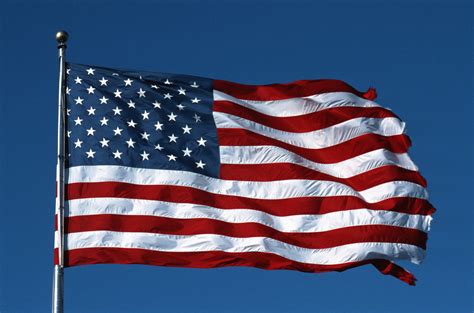
Would NATO be able to survive in a world without the United States? Theoretically, yes, but only if the European great powers—the United Kingdom, Germany and France—put the maximum political, economic and military effort into it. The remaining countries in the bloc will have to increase their defence contributions by more than the two per cent on which Washington insists today to some four or five per cent.

The short-lived rise of liberal idealism in Russia at the end of the Cold War quickly crashed into the realities of that very world, in which there is no place for the weak, and the resulting vacuum of power and domination is quickly occupied by stronger players. It is hardly surprising that realism then emerged as the platform for the revival of Russia as a great power.
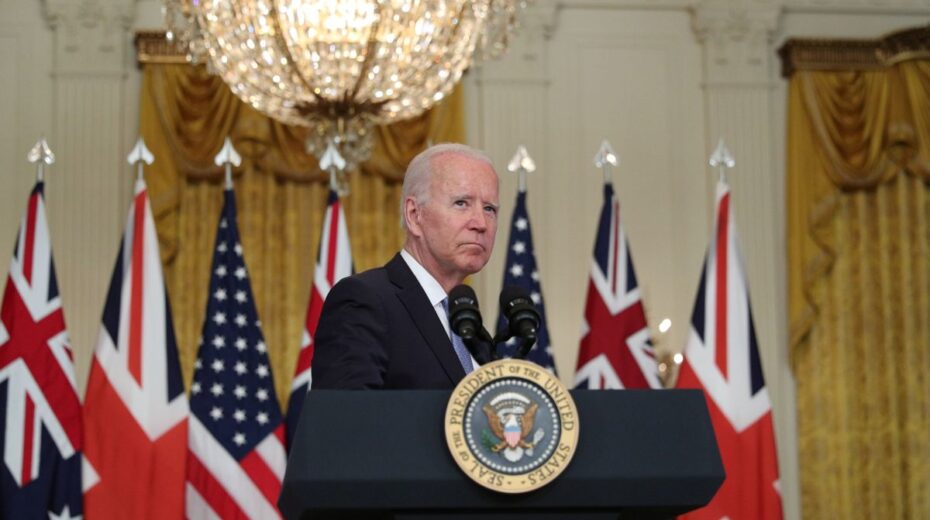
The objective is to subordinate Australia and Britain more tightly under Washington’s command for its war plan against China. Cutting the French out of the mix makes the line of command more direct for Washington.

The creation of AUKUS is only further confirmation—as if more was needed—that the Biden administration intends to wage a new cold war in Asia with China as its target.

A recent report by Economist Corporate Network, supported by Baker McKenzie and Silk Road Associates, BRI Beyond 2020 (Economist report), showed how these strengthening trade links are, in part, a result of favourable financial incentives offered to African jurisdictions by China. According to the Economist report, 33 of the poorest jurisdictions in Africa export 97 per cent of their exports to China with no tariffs and no customs duties.

Guinea has struggled with political instability and endemic corruption since its independence from France in 1958. Despite the country’s poor infrastructure, there is a significant foreign presence in Guinea. Countries are mostly competing for its mineral resources, such as gold, diamonds, bauxite, and iron ore. The United States, along with other foreign powers, vies for access to these resources and for the ability to influence the country’s government.

This election marks a watershed moment in Russian national security policy, whose large international implications will not be immediately perceived by the Western strategic policy community which remains a prisoner of its own false narrative of Russia as a country which is sooner or later bound to fail.

While the international community focuses on the Uyghur Muslim and the Wakhan Corridor, the main threat to the Central Asian states will continue to be the lack of water supplies, which will lead to conflicts between countries in the region and, perhaps, with neighbors such as China and Russia.
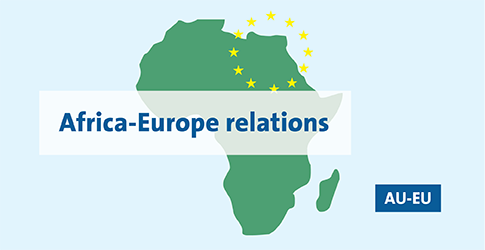
In Africa, we have the paradox that 6 out of 10 of the most quickly growing countries, most dynamic economies are African economies but at the same time, 36 most vulnerable countries are also in Africa. It is a very heterogeneous continent. And all countries will be affected but for most, if we do not give debt relief, and I mean much more than just freezing payments, we are going to go into a crisis of external debt, and this we cannot afford.

Mozambique Might Require Foreign Military Assistance To Clean Up Its Hybrid War Mess
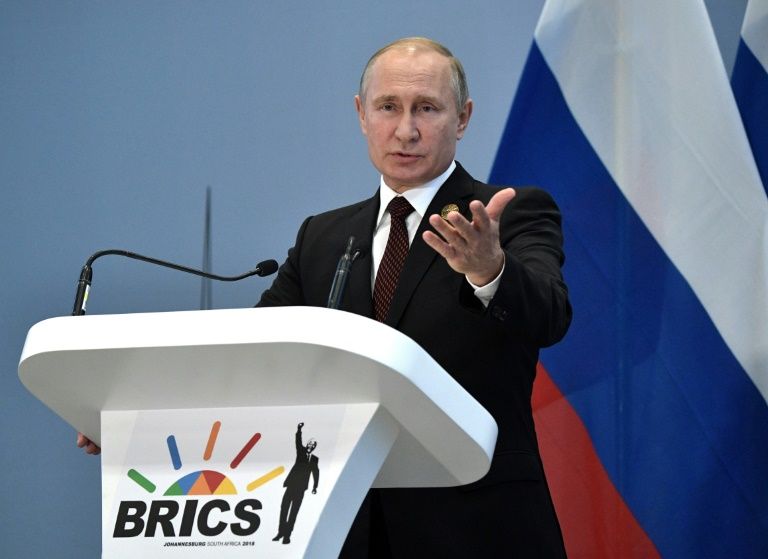
Russia-Africa Summit: The Roadmap to Africa, Shift in Geopolitical Relations

China and Russia Launch a ‘Global Resistance Economy’
Why South Africa Should Embrace Pakistan’s “Look Africa” Policy
Please, contact our team at info@ascarf.org.za to send submissions, suggestions, or discuss possible partnerships.
Views expressed are of individual contributors, rather than the ASCARF's, unless explicitly stated otherwise. Some publications may contain information not suitable for users under 16 years of age.